Exploring the Four Approaches to Artificial Intelligence
TL;DR
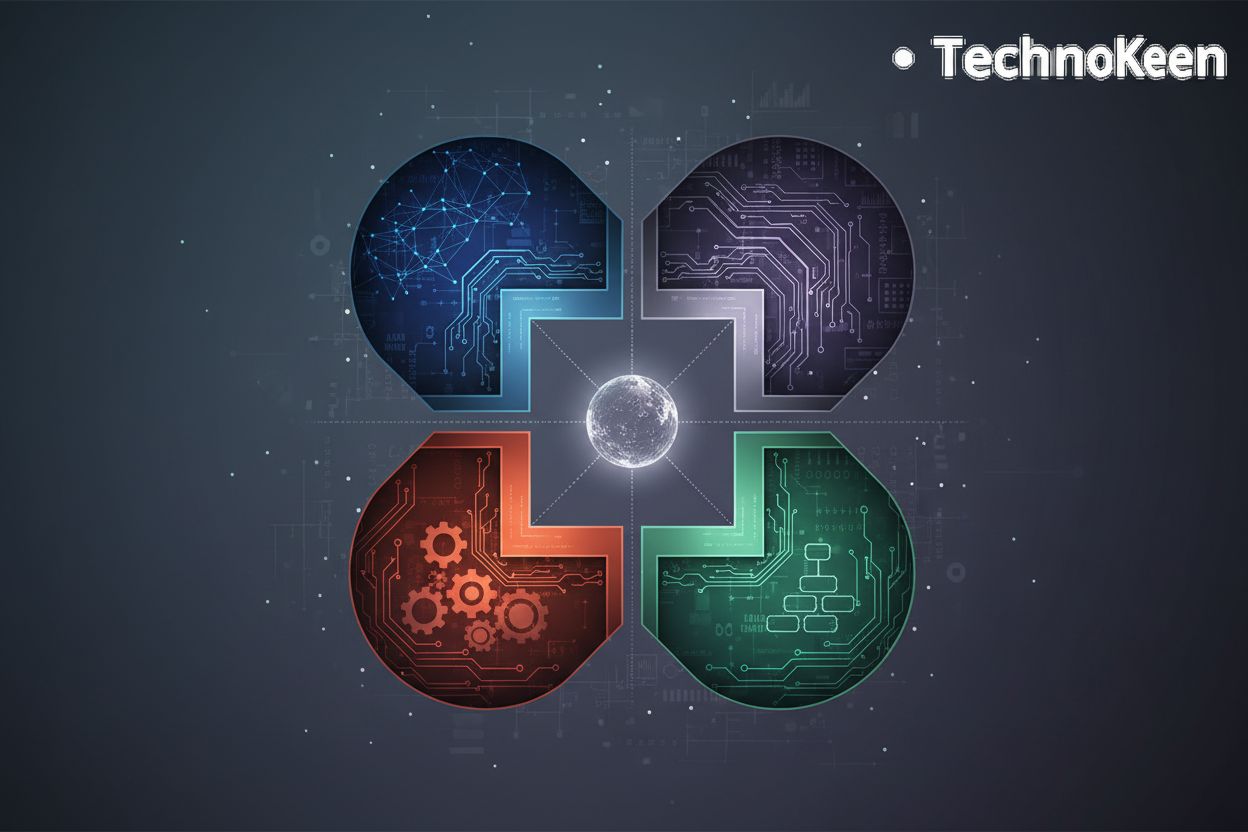
- This article covers the four main approaches to AI—Reactive Machines, Limited Memory, Theory of Mind, and Self-Awareness—exploring their characteristics, current applications, and potential future impact. It also examines how these approaches are being utilized in AI agent development, deployment, and automation across various industries, with a focus on practical applications and strategic business advantages.
Introduction: Understanding the AI Landscape
Alright, let's dive into ai! Ever feel like it's everywhere, but you can't quite put your finger on what it is? Like, is it just robots taking over, or is there more to the story?
Well, there totally is more to it! Here's a quick rundown:
- ai's not new, but it's evolving. We've actually been working on ai for decades. What's different now is the tech is finally catching up.
- It's not all the same thing. There's actually different types of ai, each with its own strengths - and weaknesses.
- It is not just about robots. ai is used in healthcare, retail, and even finance.
Understanding these different approaches is super important for businesses. It helps with strategic planning, deciding where to put resources, and figuring out potential risks. Knowing the type of ai you're dealing with lets you manage expectations and implement it effectively. This classification matters because it guides how we develop, deploy, and ultimately benefit from artificial intelligence. Speaking of, let's look at why this classification even matters.
Approach 1: Reactive Machines – The Basics
Okay, so reactive machines are pretty straightforward, right? They're like that Roomba you got on sale – it just reacts to stuff. It bumps into a wall, it turns. Simple.
- These machines don't, like, learn anything. They just do what they're programmed to do. Think of Deep Blue, the chess computer; it didn't learn strategy, it just calculated moves real fast.
- They're super useful for repetitive tasks. Ever see those arms in factories that just keep welding the same spot over and over? Yeah, those are probably reactive machines.
- Course Sidekick mentions "advancements in artificial intelligence" in relation to these basic systems, highlighting their continued relevance for specific, predictable operations.
Honestly, they're kinda dumb, but that's what makes them so reliable! Now, let's talk about ai with actual memories...
Approach 2: Limited Memory – Learning from the Past
Limited memory ai, huh? It's like, can't remember everything, but it can remember some stuff. Think of it as having a short-term memory upgrade compared to those totally clueless reactive machines.
- These ai systems store recent experiences. Self-driving cars use this to keep track of nearby vehicles... like, is that car about to merge into my lane or not?
- They use this memory to inform future decisions. Chatbots, for example, can remember what you just asked so you don't have to repeat yourself every single message.
- Recurrent neural networks (rnns) are often used for this. I mean, it's all pretty complex, but basically they're designed to process sequences of data. The way RNNs work is by passing information from one step in the sequence to the next, allowing them to "remember" previous inputs and use that context to make better decisions about the current input.
It's not perfect, though. Limited memory ai still struggles with really complex reasoning. But hey, it's a step up, right? Now, let's talk about the next level: theory of mind...
Approach 3: Theory of Mind – Understanding Intentions
Theory of mind? It's kinda like, does the ai get what I'm thinking? It's about understanding intentions, beliefs, and emotions – something humans do pretty naturally, but its a real challenge for ai.
- Modeling emotions: This could involve ai analyzing text for sentiment or even using facial recognition to gauge a person's emotional state, helping businesses understand customer feedback better.
- Predicting behavior: Imagine ai in healthcare that can anticipate a patient's needs based on their history and current emotional state, perhaps by identifying patterns in their communication or activity.
- Social intelligence: This is about ai that can navigate social situations smoothly, like a virtual assistant that knows when to be assertive and when to back off, perhaps by learning conversational norms and social cues.
It's still early days, but this is where ai gets really interesting. Next up: self-awareness...
Approach 4: Self-Awareness – The Ultimate Goal
Self-awareness in ai? Now that's where things get really sci-fi, right? It kinda makes you wonder if we're creating something that'll eventually look back at us and think, "Huh."
- Understanding itself: This means the ai knows its own code, its limitations, and even its goals. Not just following instructions, but knowing why.
- Consciousness is the big question mark: We're talking sentience – feelings, subjective experiences, maybe even a "soul"? It's a huge philosophical can of worms.
- We aren't really close: honestly, we're not even sure how to get there. It's mostly theoretical at this point, but it's the "holy grail" for many ai developers. The difficulty lies in defining and replicating consciousness, which is still a profound mystery even in biological systems.
And the implications? Huge. But, well, we'll save that doomsday discussion for the next section...
Integrating AI Approaches into Business Automation
Okay, so you've got all these cool ai approaches – reactive, limited memory, theory of mind, self-aware – but how do you, like, actually use them in your business? It's not just about throwing tech at a problem, but matching the right ai to the right task is super important.
- Matching ai capabilities to business needs: it's kinda like finding the right tool for the job. Need to automate simple tasks? Reactive machines might be perfect. Want to personalize customer experiences? Limited memory ai could be the way to go.
- Balancing complexity and cost is key: the more advanced the ai, the more it's gonna cost. You don't wanna over-engineer a solution when a simpler one will do just fine, right?
- ai governance and security are a must: you need to make sure your ai systems are fair, transparent, and secure. Nobody wants a rogue ai making bad decisions or leaking sensitive data.
Think about marketing automation – ai can analyze customer data to personalize email campaigns, predict customer behavior, and even generate content. Personalizing email campaigns often relies on limited memory AI to track past interactions and preferences, while predicting customer behavior might involve more advanced models that incorporate elements of theory of mind to understand underlying intent and motivations. It's not just about sending out generic emails anymore, it's about creating targeted messages that resonate with individual customers.
Next up, we'll look at some of the potential pitfalls.
Conclusion: The Future of AI and Its Impact
So, where does all this ai stuff leave us, then? It is kinda wild to think about how far it's come, an' all the places its going.
- ai is evolving: Reactive machines remain valuable for basic tasks, while limited memory AI is increasingly prevalent. Theory of Mind represents a significant, albeit challenging, frontier in AI development, and self-awareness is still largely theoretical.
- Ethical considerations? Huge: We kinda need to think about fairness, transparency, and, y'know, not creating Skynet.
- Governance is key: setting up some rules and making sure everyone plays nice.
It's not just tech, its how we, as humans, choose to use it. it's about making sure ai helps us build a better future.